
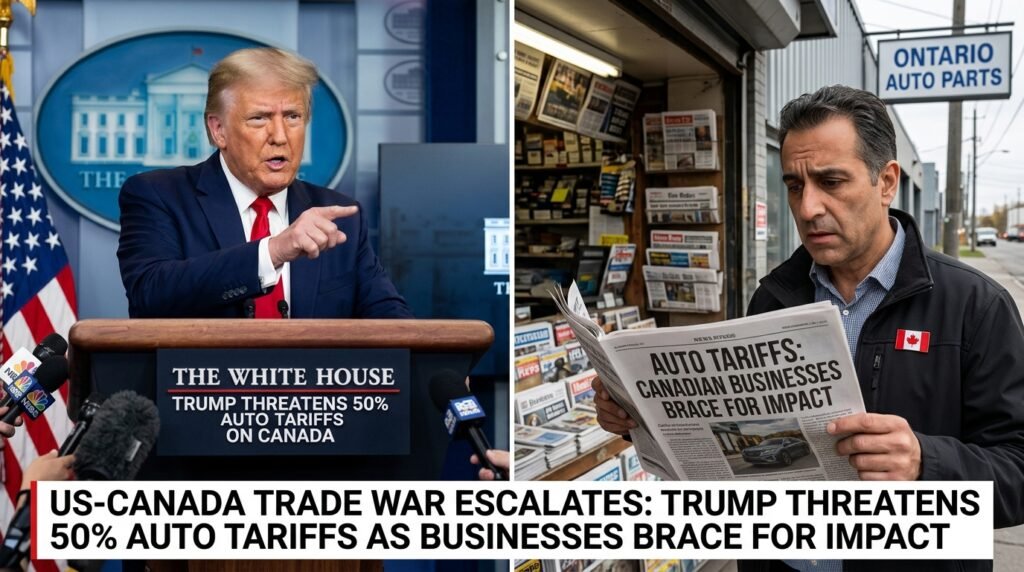
The trade relationship between the United States and Canada has gotten much worse. President Trump made an announcement about tariffs on Canadian cars, trucks, auto parts and steel. Starting January 1, 2027, the rate will go up to 50%. That is twice the current 25% tariff on autos. This action comes after the breakdown of trade talks between the two countries last week.
Why the Talks Broke Down
Both countries are blaming each other. U.S. officials say Canada asked for many changes at the last minute. Canadian Prime Minister Mark Carney told reporters that the U.S. suggested new terms. Those terms would have made it harder for Canada to create trade deals with other countries in the future. Carney also said the U.S. demands touched on protecting Quebec’s French-speaking culture. Canada did not agree to those conditions.
Trump also said Canada should be treated like a U.S. state instead of a trade partner. These comments have caused strong reactions from Canadian officials and citizens.
Tariffs Already in Place
Before this new threat, the U.S. had already put 50% tariffs in place over the weekend. Those tariffs apply to about $20 billion of goods, including wine, cement, clothing and hockey equipment. Carney promised that Canada will respond dollar-for-dollar. Starting in September, Canada will target U.S. steel, dairy, appliances and electronics.
The Real-World Cost
Small businesses on both sides of the border are already feeling the effects. A jewelry maker in Calgary sells mostly to American customers. She expects to lose about half her U.S. sales once the new prices start. A clothing brand in Toronto says international retailers are canceling shipments rather than pay the extra cost. A U.S. wine producer has spent over a year storing product he can’t send north because of an ongoing boycott.
Nearly 70% of Canada’s exports go to the U.S. Because of that, experts say Canada is far more economically exposed than the U.S. in this conflict. Still, more people in Canada support standing firm rather than making further concessions.
What Happens Next
There are no talks planned right now. Both governments seem to be settling in for a prolonged standoff. Business groups in the U.S., including a coalition of major company CEOs, have asked both countries to return to the table. They warn that costs will keep rising for consumers and companies alike.
Sources:CNBC, Al Jazeera and the BBC.