
By Globe News Report Staff
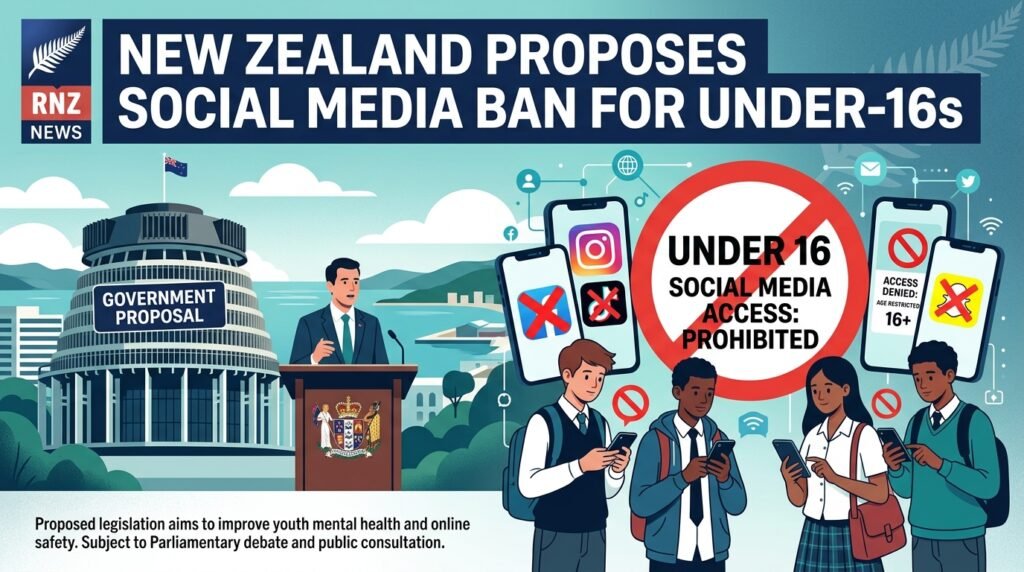
New Zealand Prime Minister Christopher Luxon has unveiled a bill that would ban children under 16 from using social media. He announced the proposal on Monday. He said the country “cannot accept the harm being done to a generation of New Zealand children.”
What the Bill Would Do
Under the proposed law, platforms like TikTok, Instagram, Snapchat and Facebook would have to check that users are over 16. Companies could use methods like existing account information, facial age estimation, and digital ID checks. Platforms that fail to meet these rules could face fines. The fines could reach up to 10% of a platform’s global revenue.
No penalties are planned for children, parents, or caregivers. Luxon pointed to research from 2025. It found that a third of New Zealand teenagers spend at least five hours a day on social media.
“Social media is exposing them to harmful content, addictive technology and pressures they are not equipped to deal with,” Luxon said. He added that it is affecting children’s family life, mental health, sleep, and education.
Not Everyone in Government Agrees
The bill faces resistance, even from within Luxon’s own coalition. Both the ACT party and New Zealand First have said they will vote against it. NZ First leader Winston Peters called Australia’s similar ban a “colossal failure.” He said keeping children off social media should be the responsibility of parents, not the government.
New Zealand’s parliament will dissolve on October 1. That’s ahead of the general election in November. This means there likely won’t be time for a vote before then. Bills in New Zealand must pass three rounds of voting. That process usually takes months.
Following Australia’s Lead
New Zealand would join a growing list of countries restricting social media for children. Australia introduced the world’s first under-16s ban in December 2025. Since then, Canada, Brazil, and Indonesia have passed similar laws. The UK and Greece are expected to introduce restrictions next year.
However, Australia’s ban has faced criticism. Reports show that more than eight in ten Australian teenagers are still using social media three months after the ban took effect. Critics say age-verification bans can be worked around. They also raise privacy concerns. Meanwhile, critics argue the bans do little to change the platform features that make social media addictive in the first place.
Earlier this month, France’s top court struck down a similar proposed ban for under-15s. The court ruled that it violated freedom of expression.
Sources:ABC News, BBC,